3PL Digital Transformation: Becoming Tech-First

The third-party logistics (3PL) industry is at a crossroads. For decades, 3PLs competed in a number of dimensions, including size of fleet, square footage of warehouse space, and geographic reach within a region. However, as commerce continues to evolve, delivery expectations have shrunk to hours and even minutes, real-time tracking is now the standard for every order, and the margin for error in logistics has shrunk dramatically. Thus, to thrive in the next decade, 3PLs must become on-demand specialists—i.e., tech-first 3PLs.
In order to achieve the full potential for 3PL companies, they have to fundamentally rework their current operations from scratch. Only then will they be able to reach a uniform process within all areas of the company in order to guarantee a smooth data flow, the correct decision, and a proper distribution. Platforms like Libera support 3PL companies on their way to achieving their full potential.
For 3PL executives, the stakes of getting this right are high. Shippers are actively re-evaluating logistics partners based on technological capability, not just price and geographic reach. A 3PL without strong supply chain optimization capabilities and modern digital infrastructure risks being seen as a commodity provider rather than a strategic partner, and commodity providers are the first to be squeezed on margin or replaced altogether.
Why traditional 3PLs are under pressure
A traditional 3PL’s business model of having a large fleet, a large number of warehouses, and large geographic coverage does not work anymore. For decades, 3PLs competed on these dimensions. But now, in today’s commerce environment, in terms of e-commerce, in terms of marketplaces, in terms of different types of distribution channels, they compete on different dimensions. The two biggest dimensions are technological capability and price. And on the price dimension, 3PLs are already being squeezed on margin as it is. The last thing 3PLs want to do is to compete on price as a commodity 3PL. And that is what they are when they don’t have the same technological capabilities as their peers.
Traditional 3PLs relying on manual dispatching, spreadsheet-based planning, and legacy systems are finding it increasingly difficult to compete. Without modern supply chain solutions, they struggle with:
- Inefficient route planning that inflates fuel and labor costs
- Poor last-mile delivery solutions, the most expensive and error-prone leg of any shipment
- Limited visibility into warehouse operations, leading to stockouts and overstocking
- An inability to scale up or down quickly for demand spikes
- Disconnected systems that make supply chain risk management nearly impossible
The result is a widening gap between 3PLs that have modernized and those still operating on outdated infrastructure. Closing that gap requires more than incremental upgrades — it requires a full digital transformation strategy.
The case for digital transformation
There is no need to implement all supply chain automation tools at the same time. First, the most important tools should be implemented, and then they should be integrated into a solid logistics management software platform step by step. At the center of this transformation is a new generation of supply chain management software that unifies previously siloed functions such as transportation, warehousing, order management, and analytics into a single connected ecosystem. This is where a platform like Libera comes in, offering a SaaS-based backbone that traditional 3PLs can integrate with rather than build from scratch.
The advantages of this approach are significant:
- Faster time to market: Instead of spending years developing proprietary software, 3PLs can plug into an existing logistics software company's platform and go live in a fraction of the time.
- Lower total cost of ownership: SaaS models eliminate the heavy capital expenditure of building and maintaining in-house logistics ERP software, replacing it with predictable subscription costs.
- Continuous innovation. A modern SCM software platform evolves constantly, meaning 3PLs benefit from new features like AI-driven forecasting or automated exception handling without needing their own R&D teams.
Core pillars of the tech-first 3PL
1. AI-Powered predictive logistics
AI in supply chain operations is no longer experimental; it is a competitive necessity. Predictive logistics uses historical and real-time data to forecast demand spikes, anticipate delays, and proactively reroute shipments before problems occur. AI in supply chain management enables 3PLs to move from reactive firefighting to proactive planning. Instead of discovering a delay after it happens, dispatchers get advance warning and can adjust in real time. This capability, sometimes described as AI in logistics and supply chain, is becoming a standard expectation among enterprise shippers evaluating potential logistics partners.
The broader trend of AI in SCM also extends to demand sensing, dynamic pricing, and automated carrier selection, all of which reduce cost while improving service levels. For 3PLs, adopting AI in logistics isn't just about keeping up with competitors; it's about unlocking efficiencies that were previously impossible with manual planning.
2. A modern transportation management system (TMS)
No digital transformation is complete without a robust transportation management system. A best-in-class TMS consolidates carrier management, freight booking, load optimization, and documentation into one interface.
Transportation management system software built for scale gives 3PLs the tools to:
- Compare carrier rates and select optimal routes automatically
- Automate freight audit and payment processes
- Improve on-time delivery performance
- Reduce empty miles and deadhead trips
When evaluating TMS software, 3PLs should prioritize platforms with open APIs, allowing seamless integration with existing ERP and warehouse systems. A flexible TMS system should feel less like a standalone tool and more like connective tissue across the entire operation; this is exactly the architecture Libera's platform is designed around.
3. Route planning and last-mile optimization
Last mile logistics solutions consistently represent the highest-cost, highest-friction part of the delivery journey. This is where route planning software becomes essential. By using dynamic algorithms that account for traffic, delivery windows, driver availability, and vehicle capacity, 3PLs can dramatically cut delivery times and costs.
Modern last-mile delivery platforms also enable dynamic re-routing in response to failed deliveries, address issues, or last-minute order changes, which were simply unavailable under legacy dispatch models. Combined with delivery management tools that provide customers with live ETAs and proof-of-delivery confirmation, 3PLs can meet the rising bar for customer experience that today's on-demand economy demands.
4. Warehouse management as a digital hub
The logistics warehouse management system of the future functions as a real-time data hub, not just a physical storage tracker. A modern warehouse management system connects inventory data directly to transportation planning, ensuring that stock levels, order status, and shipment readiness are always synchronized.
Warehouse management integrated into a broader logistics management system eliminates the blind spots that cause fulfillment delays. When paired with automations like robotic picking, barcode/RFID scanning, and automated replenishment triggers so that 3PLs can process significantly higher order volumes without proportional increases in labor costs.
5. Supply chain control tower and real-time visibility
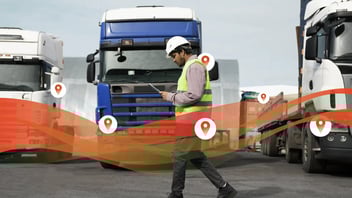
Perhaps the single most transformative capability for a modern 3PL is the supply chain control tower, which is a centralized dashboard providing end-to-end visibility across every shipment, warehouse, and carrier relationship.
A true control tower delivers real-time tracking across the entire network, giving both the 3PL and its customers a single source of truth. This level of supply chain visibility supports faster decision-making, better exception management, and stronger supply chain risk management, since disruptions can be identified and mitigated before they cascade into larger service failures.
6. Data-driven supply chain analytics
None of these capabilities matter without the ability to measure and optimize performance continuously. Supply chain analytics transforms raw operational data into actionable insight such as identifying bottlenecks, benchmarking carrier performance, and forecasting future capacity needs.
Robust supply chain optimization tools allow 3PLs to continuously refine routes, staffing levels, and inventory positioning. This ongoing refinement is what separates a truly agile, tech-first 3PL from one that merely digitized its old processes without changing its underlying approach to logistics optimization.
Integrating with a SaaS platform: The Libera approach
For traditional 3PLs, the path to becoming a tech-first, on-demand specialist doesn't require reinventing the wheel. By integrating with a logistics company platform, such as Libera, a 3PL can have a unified TMS that is advanced enough to function as a logistics supply chain management system’s control tower in conjunction with AI-powered forecasting and planning for the various functions such as demand planning, supply planning, and inventory planning. Such a 3PL can also have the last mile optimized by the same platform.
Furthermore, such an integration future-proofs a company, because new developments in the digital supply chain automatically will be added to the platform, which is already being used by a company. This is in stark contrast to in-house developed systems, which quickly become outdated because of technical evolution.
The path forward: Becoming an on-demand specialist
3PLs that choose to be on-demand specialists can use smart logistics, AI, automation, and real-time data to unlock additional revenue and higher margins and create a more resilient business. For these 3PLs, the main question is how fast they can integrate the required technology to be able to compete in the on-demand marketplace. Solutions providers like Libera can support 3PLs in their digital transformation in an efficient manner. As they become more proficient at providing better service, the new supply chain capability will unlock additional sources of revenue while improving margin. It will also enable the 3PL to become a strategic partner for their customers and clients.
For traditional 3PLs ready to make this leap, the question is no longer whether to transform digitally, but how quickly they can integrate the right technology stack to compete in an on-demand world. Platforms like Libera exist to make that transition not just possible but genuinely efficient, turning supply chain optimization from an aspiration into an everyday operational reality.
Getting Started: A Practical Roadmap
For 3PLs beginning this journey, the transformation doesn't need to happen all at once. A phased approach tends to work best:
- Audit current systems to identify where manual processes, disconnected data, and legacy software are creating the biggest inefficiencies.
- Prioritize high-impact areas first — typically transportation management and last-mile delivery, since these deliver the fastest, most visible ROI.
- Integrate a unified platform rather than bolting on point solutions, since fragmented tools tend to recreate the same visibility gaps in a new form.
- Layer in AI capabilities incrementally, starting with demand forecasting and predictive routing before moving into more advanced automation.
- Continuously measure performance using analytics dashboards to validate that new tools are actually improving cost, speed, and customer satisfaction.
This roadmap reflects how the strongest 3PLs are approaching modernization today: not as a single dramatic overhaul, but as a deliberate, data-informed evolution toward becoming a genuinely tech-first organization.
The 3PLs that treat this transformation as an ongoing capability rather than a one-time project will be the ones best positioned to absorb whatever the next shift in commerce demands — whether that's tighter delivery windows, new regulatory requirements, or entirely new fulfillment models. In an industry where the only constant is rising customer expectations, that adaptability may be the most valuable asset a logistics provider can build.
The key steps to follow in 3PL modernization in order to develop into technology-focused demand specialists in the field of commerce for established 3PLs are following step-by-step in a data-driven fashion.
In this way, a 3PL that makes modernization of its own company its own capability to deal with future changes in commerce will be able to deal with whatever new demands commerce puts on it. The tighter delivery time windows, new laws and regulations, and even more methods of order fulfillment than today.